



Vietnamese Hair Factory: What You Need to Know Before Buying
16/10/2026

Content
A Vietnamese hair factory is a workshop that buys cut hair, sorts and combs it, sews it into wefts or packs it as bulk, checks it and ships it out. A trader does none of that; a trader resells what someone else made. For a wholesale buyer the factory is where length, thickness and consistency get decided, so knowing how the work goes makes you a much harder buyer to fool.
What Is a Vietnamese Hair Factory?
Strictly, it's a business that does the production steps itself, on its own premises, with its own staff. Most are in northern Vietnam around Hanoi and nearby provinces, or in the south around Ho Chi Minh City. Some do everything from raw intake to export packing. Others do the sewing and checking and buy part of the hair already sorted.Neither setup is wrong, but you should know which one you're dealing with. "Factory" isn't a protected word, and plenty of websites use it for a sales office with a catalog.
How Vietnamese Hair Is Processed in a Factory
Workshops differ, so treat this as the usual order of work in the trade, not a description of any single site.Hair sourcing and collection
Most Vietnamese hair reaches a factory through collectors who buy from households, salons and small dealers, often in several hands before it gets there. It arrives in one of two forms. Ponytails are cut hair tied at the root, so every strand lies root to tip in the same direction. Loose hair comes from combings, with cuticles running both ways, and it takes far more cleanup. Only ponytail hair can honestly be sold as remy.Ask a factory which one it starts from. The answer tells you more than a grade label does.
Sorting and quality control
Sorting comes first, and it's slower than most buyers imagine. Hair gets separated by length, color and texture. A ponytail's length is the finished length, since nothing can be added back at the tips, which is why 22 inch and longer run short first.Then comes combing. Short hairs and tangles come out, and the more that's removed, the more "drawn" the hair is. Double drawn needs more raw material per bundle, and that's most of why it costs more. Raw lines skip steaming and dyeing; waved or colored lines get them, and once that happens the hair isn't raw anymore see raw vs virgin hair.
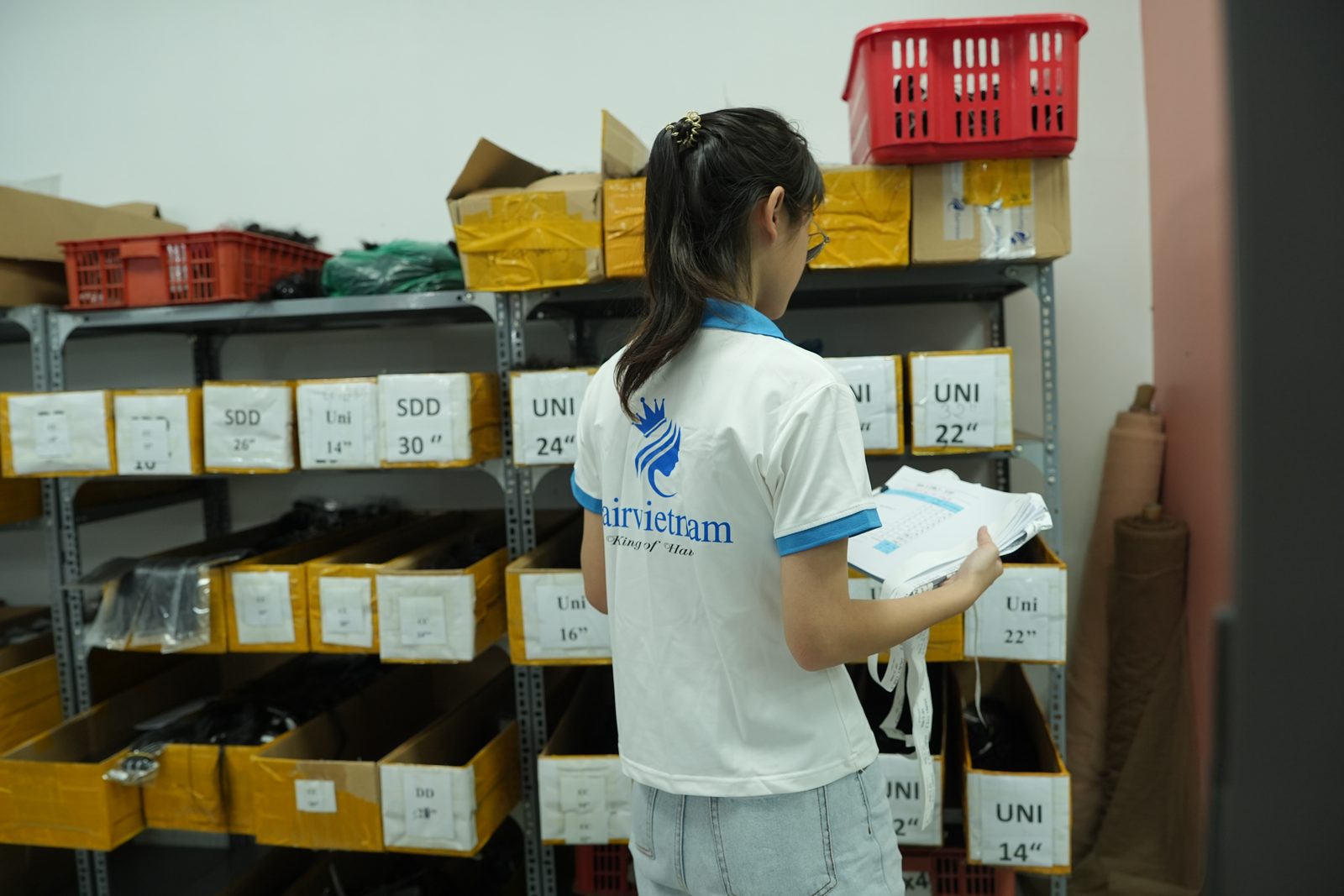
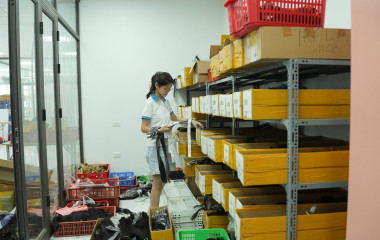
A staff member checks paperwork in front of storeroom shelves of cartons labeled with inch lengths
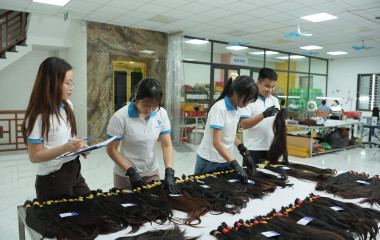
Quality control happens after sorting and again after sewing. People check length, weight, color match inside the lot, tangling and loose stitching. A real checking table has bundles handled one at a time, and a reject pile somewhere nearby.
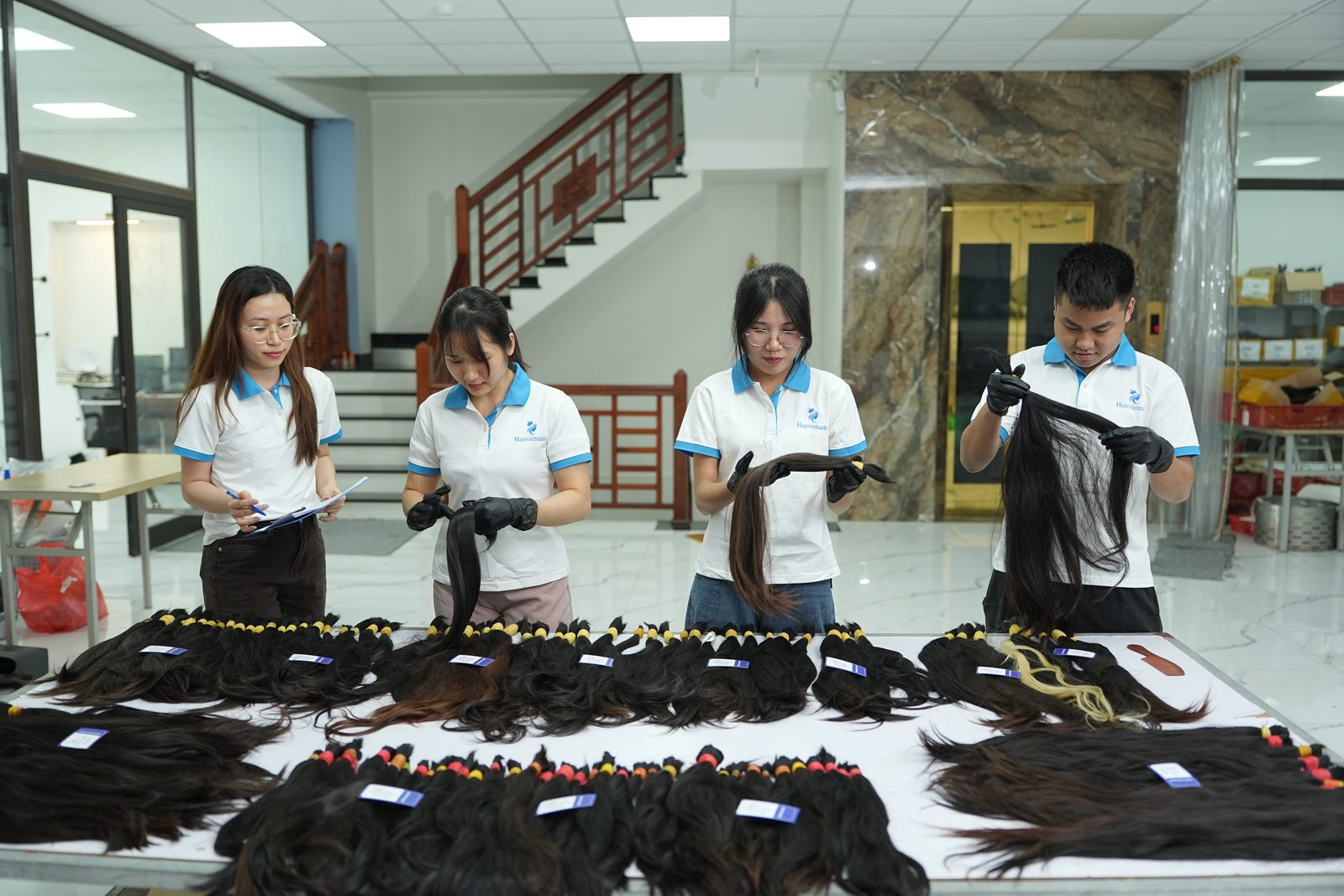
Four staff inspect dark hair bundles laid in rows on a long table
Wefting and other processing
Wefting is done on industrial sewing machines. The sewer lays hair evenly along a track and stitches it into a strip, which is cut into weave hair bundles. Uneven laying shows up later as a thin patch mid-bundle, so the sewing station is worth watching. Hair that never goes under the needle is sold as loose [bulk hair](/bulk-hair/), usually by weight, for wig makers and anyone sewing their own wefts.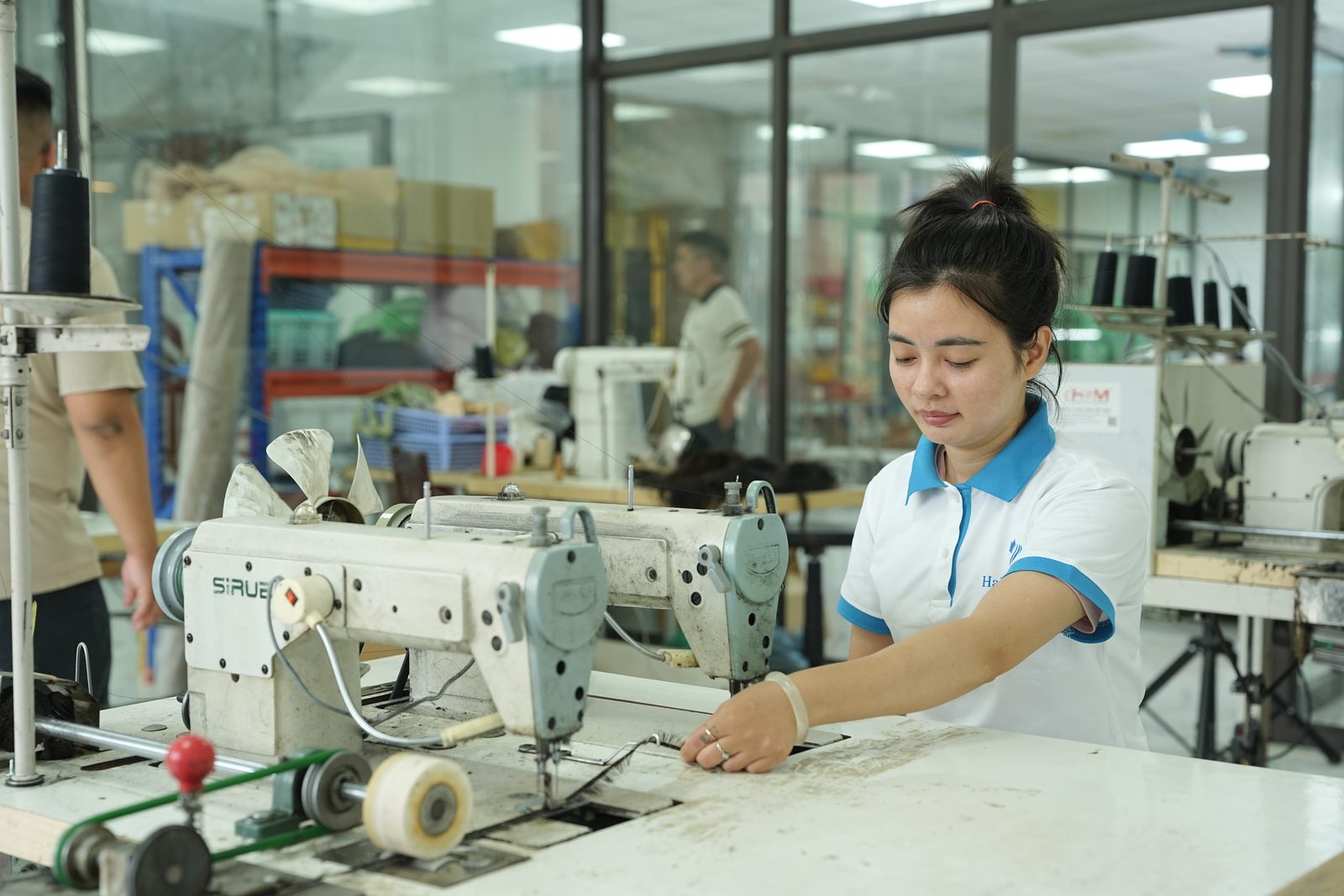
A woman at an industrial sewing machine in the factory sewing area
Last come labeling and packing for the courier or freight forwarder.
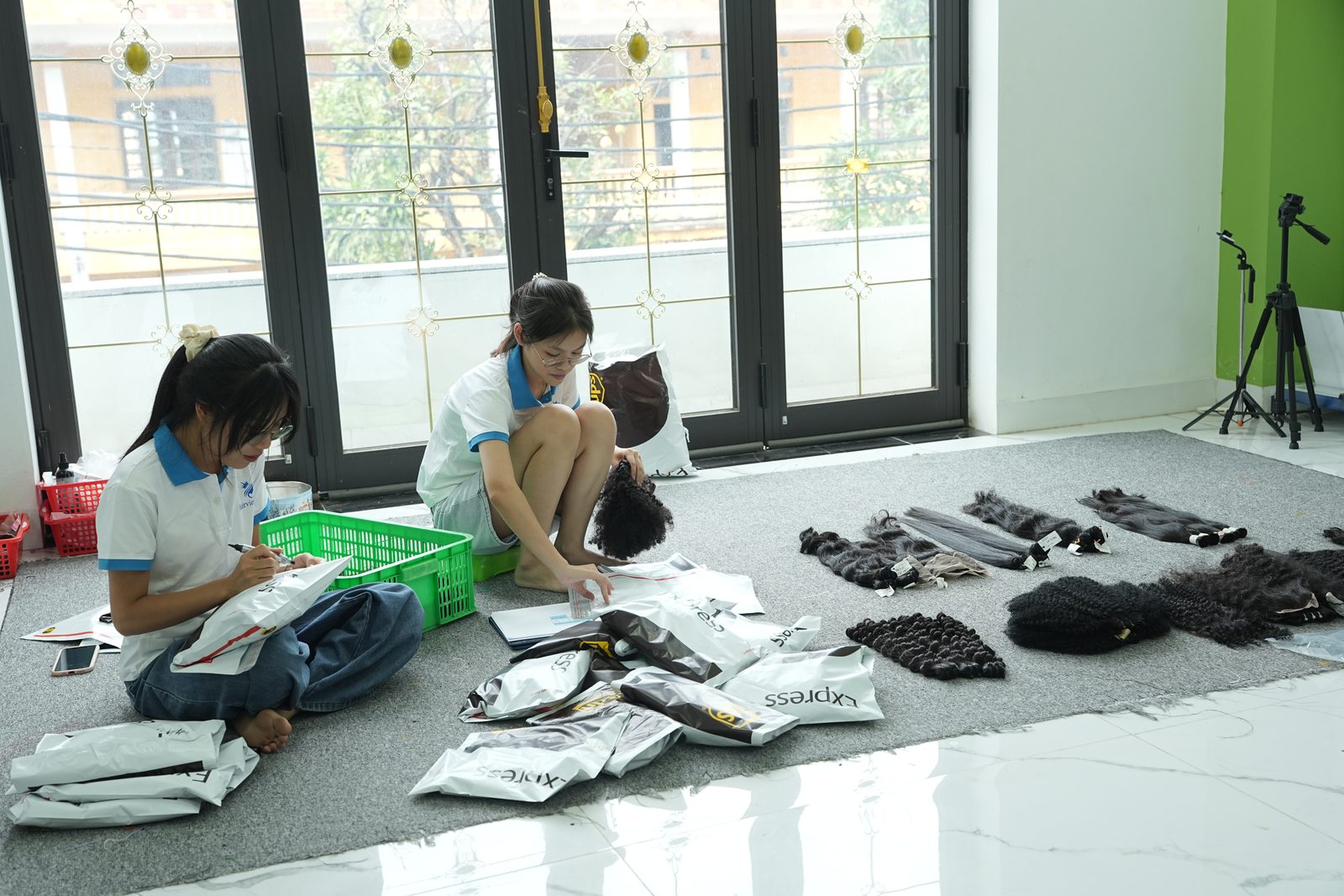
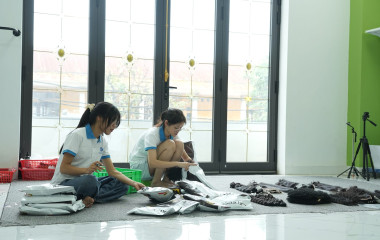
Staff fill courier bags from rows of dark hair bundles laid out on a carpeted floor
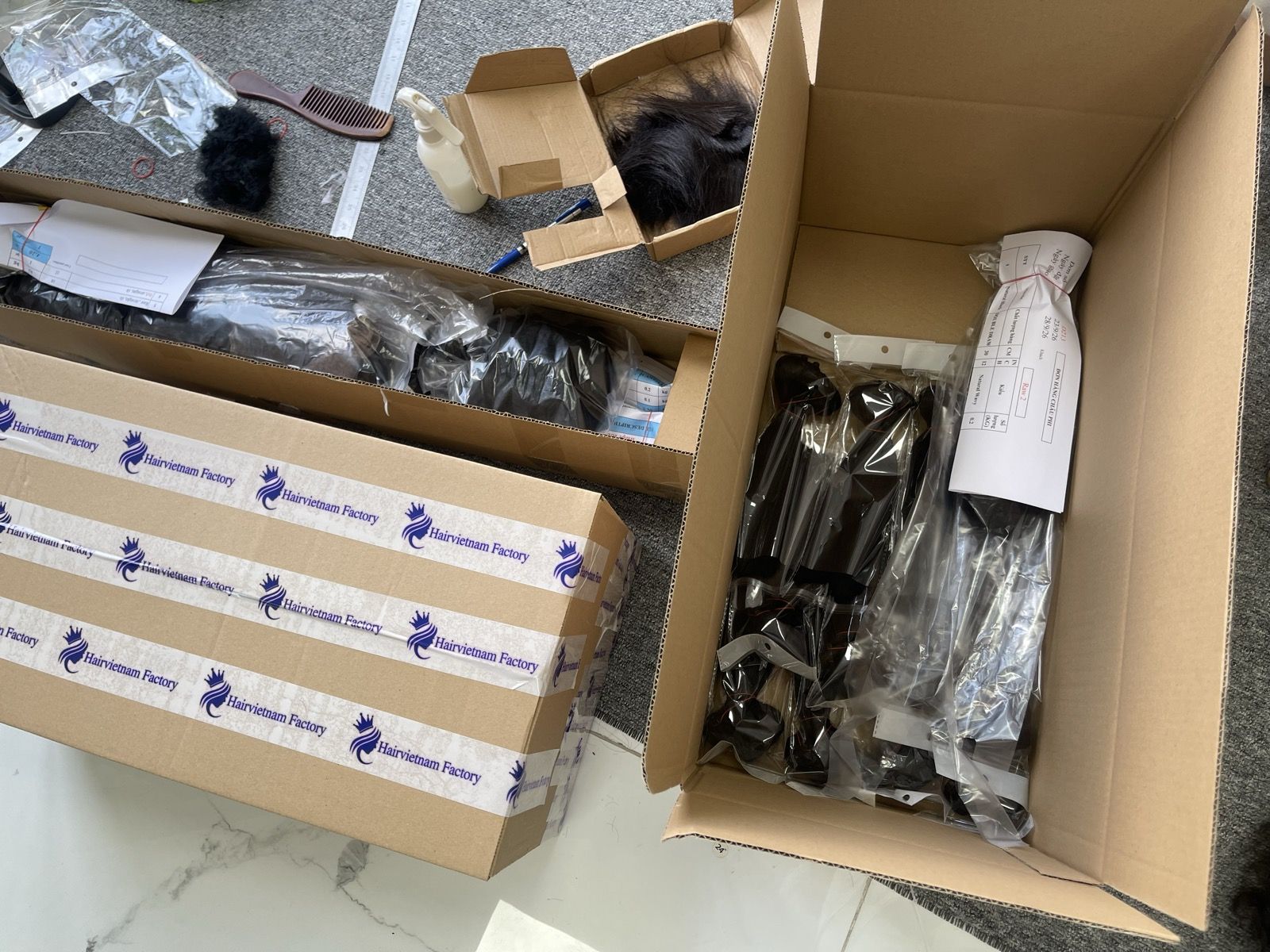
Bagged hair bundles packed in a carton next to boxes sealed with Hairvietnam Factory tape
What to Look for in a Vietnamese Hair Factory
Product quality
Get a sample cut from the lot you'd actually be buying from, not a showroom piece. Measure it stretched, weigh it, run a comb through it and look at the color along the whole length. Raw hair has natural color variation, so a sample with zero variation should make you ask questions. Tell them the texture and drawn level you want in writing; "10A" and "12A" are marketing labels, not an industry standard, and two factories mean different things by them.Production capacity
Don't ask "how much can you make?" Ask how many kilos a week they can finish in your exact lengths. Say you want 22 and 24 inch in volume. That depends on how many long ponytails the factory could buy that month, not on how many sewing machines it owns. A shop with plenty of machines can still be short of long hair, and it'll fill the gap with a shorter or mixed lot. Ask which lengths sit in stock, which are made to order, and what happens if you double the order next month.MOQ and customization
MOQ varies by product line, and bulk, wefts and wigs rarely share one. Ask for the minimum per line, and whether a smaller paid sample order is possible first. On customization, find out what's actually adjustable: lengths, weft width, color, your own labels and packaging. Get each one confirmed in writing before you pay a deposit.Vietnamese Hair Factory vs Supplier
The two overlap, and a good supplier isn't automatically a worse option. The difference is who controls the product.| Type | What they do | What to ask |
| Factory | Sorts, sews and checks hair on its own premises | Which steps are in-house? Can I see them live? |
| Supplier or vendor | Sells hair from one or several factories | Whose factory makes this line? Can you show the lot? |
| Trader | Resells with no production or stock of its own | Do you hold stock today? Who ships the order? |
Honestly, for a first order we'd care less about the label than about whether the seller can answer those questions on the spot. A small factory that buys some lengths from another workshop is common and fine, as long as it says so. Our list of Vietnamese hair vendors shows how the sellers compare.
How to Verify a Hair Factory in Vietnam
Looking for a hair factory in Vietnam online mostly turns up photos, and photos get copied. Check these instead:- Ask for a live video walk through the floor in production order, and ask them to turn the camera on whatever you point at. A recorded tour proves footage exists, not that it's theirs.
- Run their factory photos through a reverse image search. The same shots on three other sites is your answer.
- Ask for the registered company name and address, and match them to the name on the bank account you'd pay into. Be wary of personal accounts.
- Request a sample from a current lot and compare it to the photos on their site.
- Start with a small paid order before committing to volume.
At Hair Vietnam we work from our factory in Dong Tho, Yen Phong, Bac Ninh, and the Hair Vietnam factory page has more on the site.
At our site:
- Video call or visit: Yes, we do live video calls so you can see stock before you order.
- Steps done in house: every production step happens at our factory in Dong Tho, and none of it is outsourced.
- MOQ and customization: you can order one sample bundle in the length and texture you plan to buy. You pay for the bundle plus shipping.

_cr_380x240.jpg)