



Raw Vietnamese Hair Factory: Quality, Sourcing, and What to Expect
16/10/2026

Content
A raw Vietnamese hair factory buys unprocessed human hair, hair that has never been steamed, dyed or permed, and turns it into bulk or wefted bundles without changing it chemically. That second half is the hard part. Plenty of factories can sew a weft, but fewer can keep a raw line raw from intake to the shipping box. After reading this you'll know where raw hair comes from, how it's sorted, what keeps it unprocessed, and how to test a factory's raw claims before you send a deposit.
What Is a Raw Vietnamese Hair Factory?
It's a workshop whose raw line is built around one rule: nothing in the process may change the hair. Raw hair keeps its natural texture and its natural dark brown to black color, and it comes from one donor or a small group of donors. Virgin hair has also never been dyed or permed, but it may have been steamed to set a wave, which is why a steam-set curl isn't raw. We've covered the difference in raw hair vs virgin hair.The word "factory" matters too. A factory handles the hair itself: it sorts, combs and sews, so it can tell you what happened to a lot. A trader repackages somebody else's work and can only pass on what it was told.
How Raw Vietnamese Hair Is Sourced
Hair collection
Raw hair arrives in one of two forms. The better one is the ponytail: a donor ties her hair off, someone cuts above the tie, and the cuticles stay lined up the way they grew. The other is shed hair saved from brushes and combs, where the strands end up tangled in both directions. Shed hair needs much more cleaning and can't honestly be sold as remy, so ask which one the factory starts from.Collection usually happens upstream of the factory, through collectors who buy cut hair from donors and sell it on. That's the part no buyer can watch, and it's also why consistency matters: a donor who has colored or permed her hair is no use for a raw line, so the factory has to screen at intake. Ask how it does that, and listen for a specific answer.
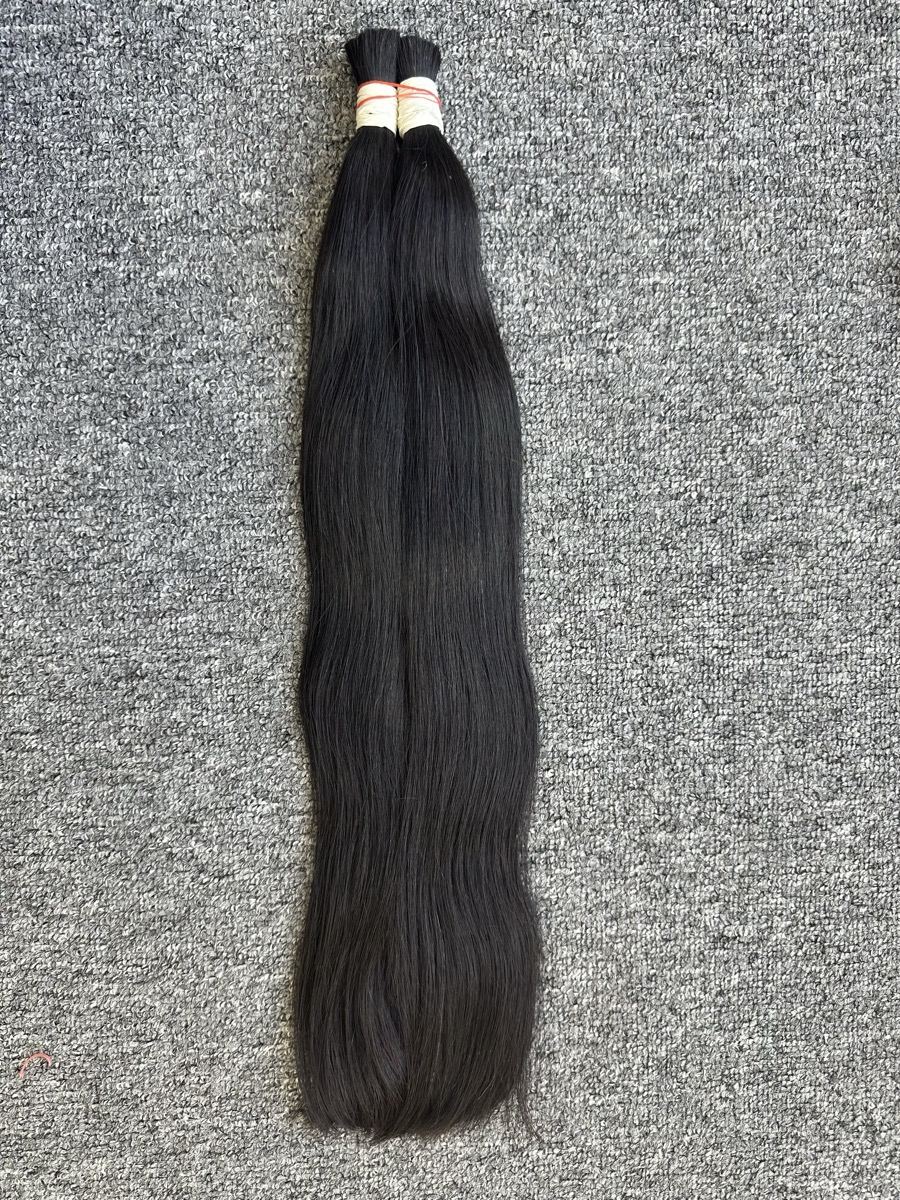
Two tied bunches of long straight dark bulk hair laid on a gray carpet
Sorting and grading
Once hair arrives, it's sorted by length, color, texture and condition. Whatever length the donor cut is the longest a bundle can ever be, so 24 inch and up is where a raw line runs short first. Gray strands, damaged hair and anything that looks chemically treated get pulled out, mostly by hand.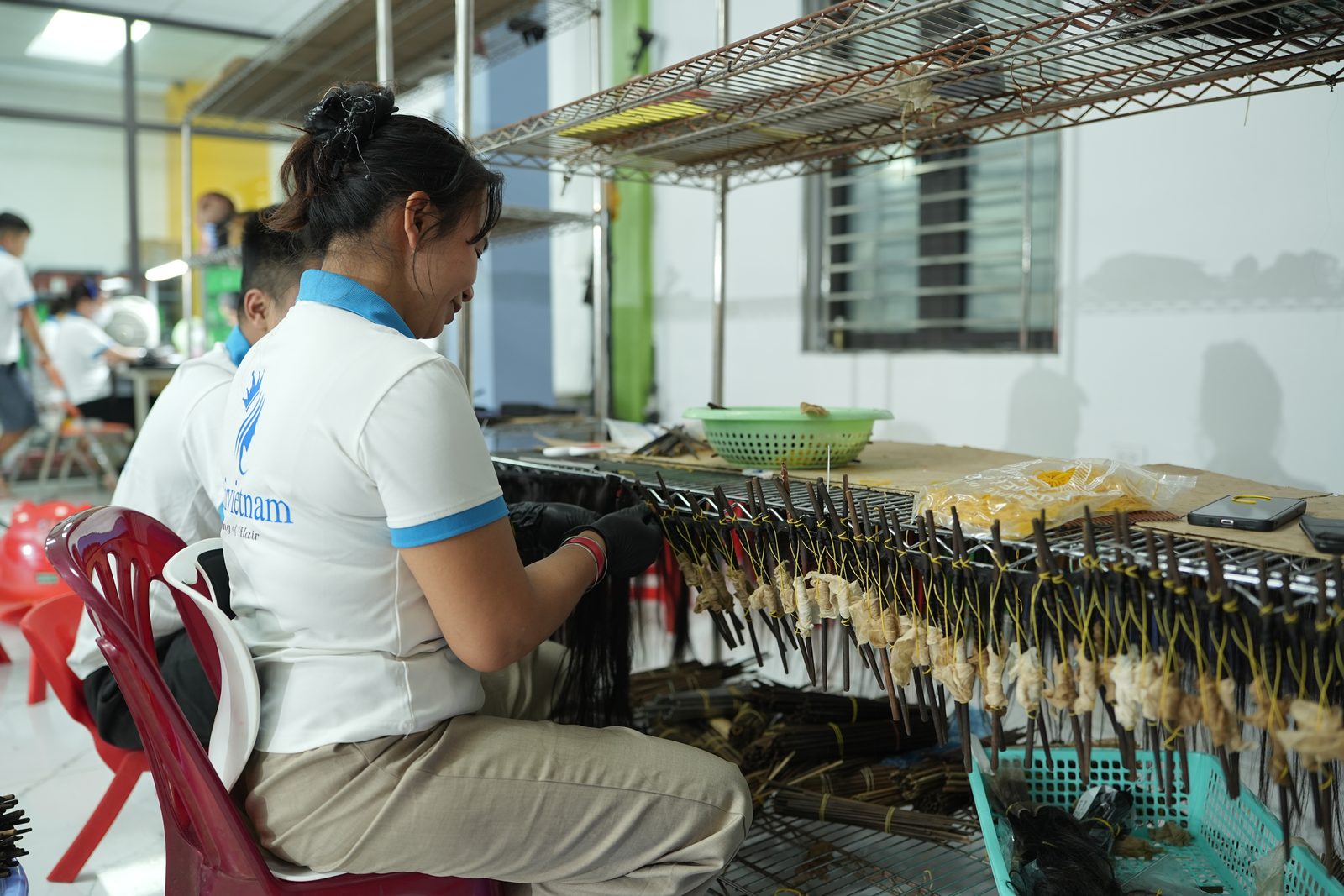
A staff member in a white polo shirt hand-works dark hair strands tied to small pegs on a wire rack
Grading is where buyers get misled. Labels like 8A, 10A or 12A are marketing. They're each seller's own shorthand, with no outside body checking them. A useful grade is a plain spec: the length, the drawn level, the texture, the color range within the lot, and how much short hair you should expect. If a factory can only give you "10A" and nothing else, you haven't been told anything. Our piece on single drawn vs double drawn hair explains why the drawn level changes both the look and the price.
Maintaining natural hair quality
What keeps hair raw is mostly what the factory doesn't do. No steaming, no dye, no perm, no bleach. Raw hair still gets washed, because it arrives dirty, so ask what goes into the water, and whether the line gets any coating or silicone finish. A coating can make new hair feel softer than it really is, and it doesn't stay once you've washed the hair a few times.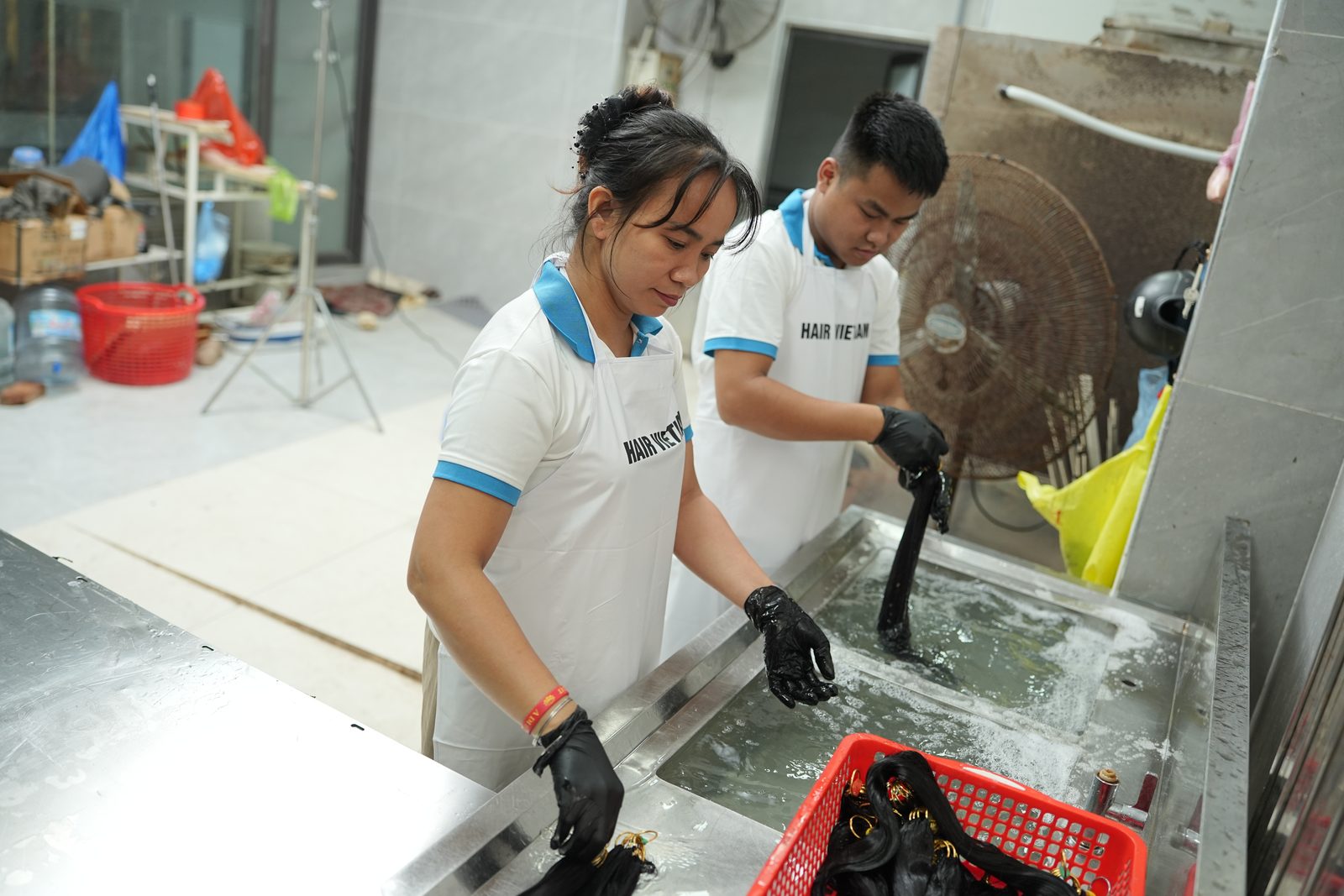
Two staff in aprons rinse dark hair bundles in a stainless-steel sink beside a red crate of bundles
Short hairs should come out by combing, not by chemical fixes. Bleaching raw hair to 613 or coloring it ends its raw status, which is fine as long as the listing says so. Raw hair also varies. Two lots can sit a shade apart, and a factory promising every bundle will match exactly is overpromising.
What Makes a Raw Vietnamese Hair Factory Reliable?
Sourcing transparency
No factory can hand you a donor-by-donor paper trail, so don't expect one. Expect straight answers. Is the raw line made from ponytails or combed hair? Is it kept physically separate from steamed and dyed lines, or do they share tables and stock? How many donors does one lot usually involve? A reliable factory answers plainly, and says "we don't know that" when it doesn't, which is a better sign than a smooth answer to everything.Quality control
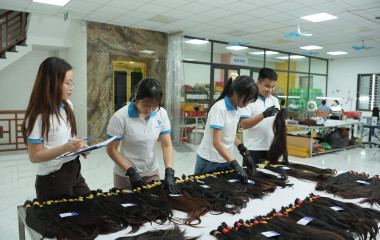
Bundles get measured straight, weighed, and looked over for tangles, loose stitching and color that drifts within a lot. Short hairs and strays are picked out by hand.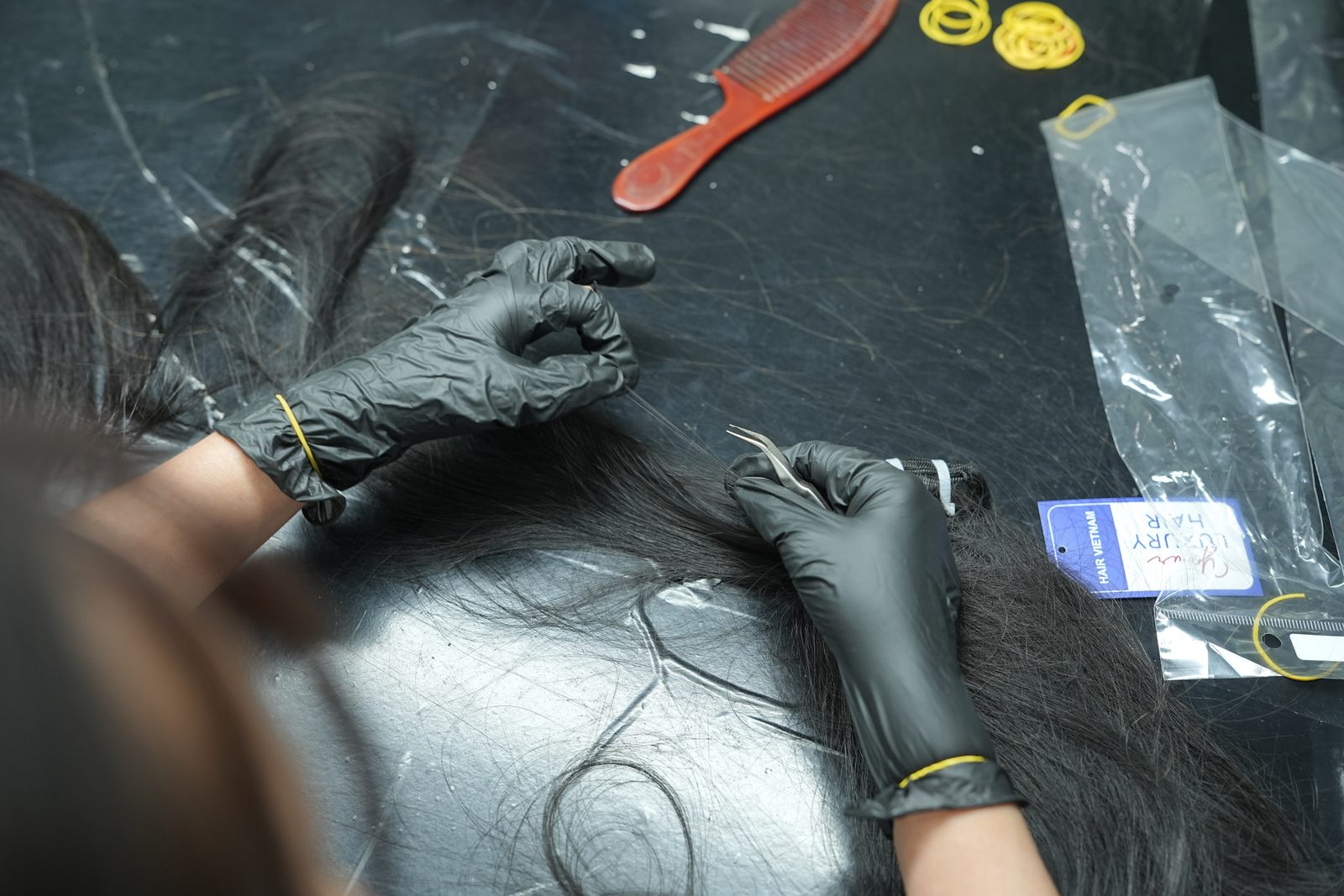
Black-gloved hands use tweezers on a section of dark hair laid on a black table, with a red comb nearby
On a live video call, ask to see this being done and to have your own length measured on camera. Then run your own test on the sample. Wash it, wear it for a week, and watch the ends. Pull a few strands and check whether the cuticle feels smooth running root to tip and rough going back. A burn test only tells you the hair is human, not that it's raw, so don't let anyone sell it as proof.
Production and customization
A raw factory should be clear about what it can change without leaving raw. Length mix, drawn level, weft thickness, and packaging or private-label tags are all fair game. Natural texture is the limit: no raw body wave if the pattern comes from steam, and no blonde out of the same line. Bulk hair is the form to ask about if you make wigs, and Vietnamese raw weave hair is what sewn bundles look like.Raw Hair Factory vs Hair Supplier
A supplier isn't automatically worse; some buy carefully and are easy to work with. The difference is how much of the raw claim they can stand behind.| Raw hair factory | Hair supplier (trader) | |
| Who handles the hair | Sorts, combs, sews in its own workshop | Buys finished product from one or more makers |
| Raw claim | Can check each step | Passes on what the maker said |
| Customization | Lengths, drawn level, packing | Mostly what's on the shelf |
| Problems | One party to answer | Often a second party behind them |
A supplier can be quicker for a first order. For a line you'll restock, a factory you can question directly usually wins. If you're weighing both kinds of seller, the Vietnamese hair vendors roundup has more names to compare.
How to Choose a Vietnamese Hair Factory for Wholesale
There isn't one "best Vietnamese hair factory," and anyone handing you a ranked list is usually selling a spot on it. The best one is the one that's honest about what's raw, can supply your lengths in volume, and answers the second and third question as well as the first.- Get the raw line's spec in writing: length, texture, drawn level, color range, and whether any step involves steam, dye or coating.
- Ask for a live video walk through the stock room, sorting and sewing. A recorded tour can't answer a question you think of halfway through.
- Order a sample in the exact lengths you'll sell, from the same lot the bulk would come from, and test it.
- When the bulk arrives, compare it with the sample. If they don't match, you've learned something before the second order.
- Before you pay, check that the invoice carries the same company name as the account you're sending money to.
At Hair Vietnam, we work from a factory in Dong Tho, Yen Phong, Bac Ninh. The Hair Vietnam factory page has more on the site.
How this works at our site:
- Hair type: our hair is remy, selected from many sources of raw Vietnamese hair. That's a different thing from the one-donor raw line described above, so don't read the checks in this post as a promise about ours. Ask us for the spec of the line you want.
- In-house work: every production step happens at our factory in Dong Tho, and none of it is outsourced.
- Quality control: we check every step of production, and every type of hair we make.
- Intake: our hair is combed hair that we buy from women in Vietnam. At the factory we gather it, sort it by length, then divide it into bundles by weight.
- Samples: you can order one sample bundle in the length and texture you plan to buy. You pay for the bundle plus shipping.
- Video call: yes, we do live video calls so you can see stock before you order.
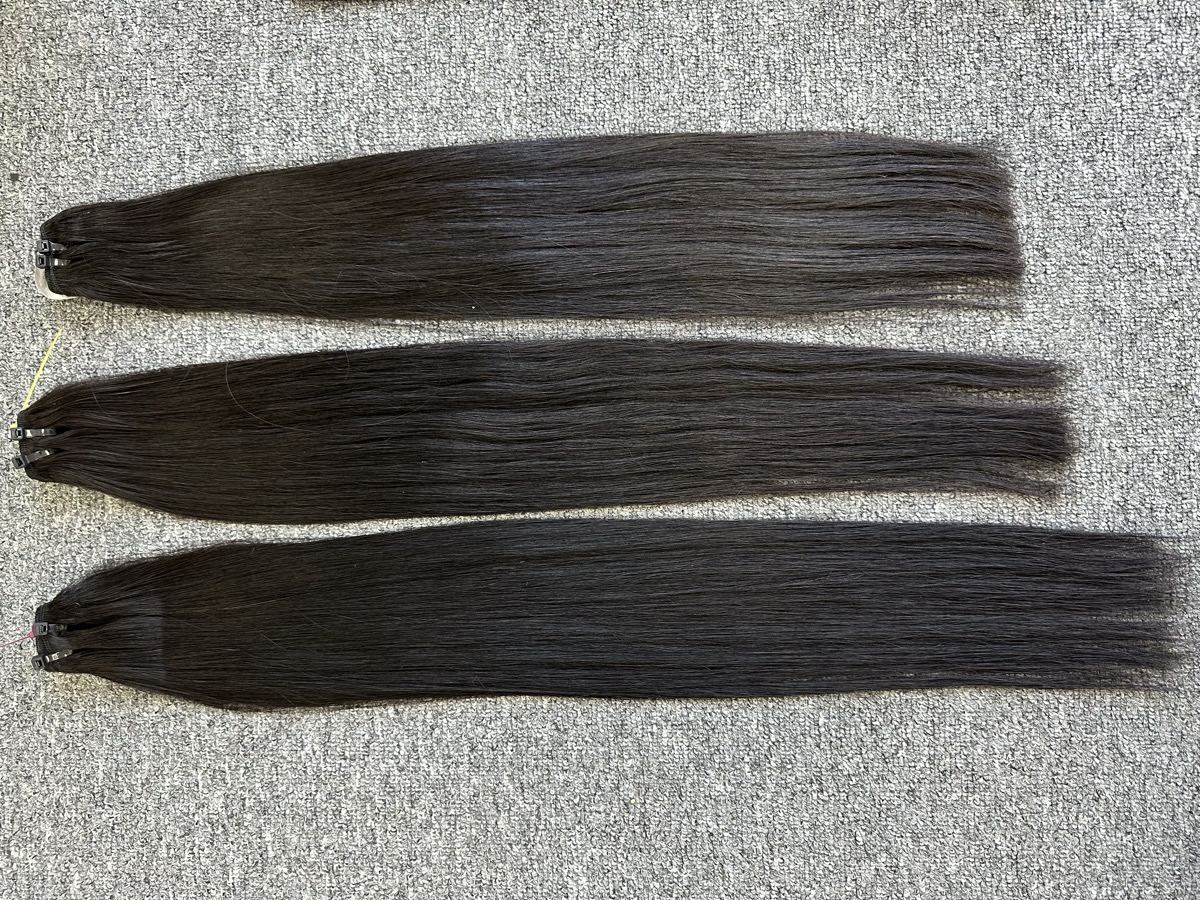
Three straight dark hair wefts of different lengths laid side by side on a gray carpet


_cr_380x240.jpg)